
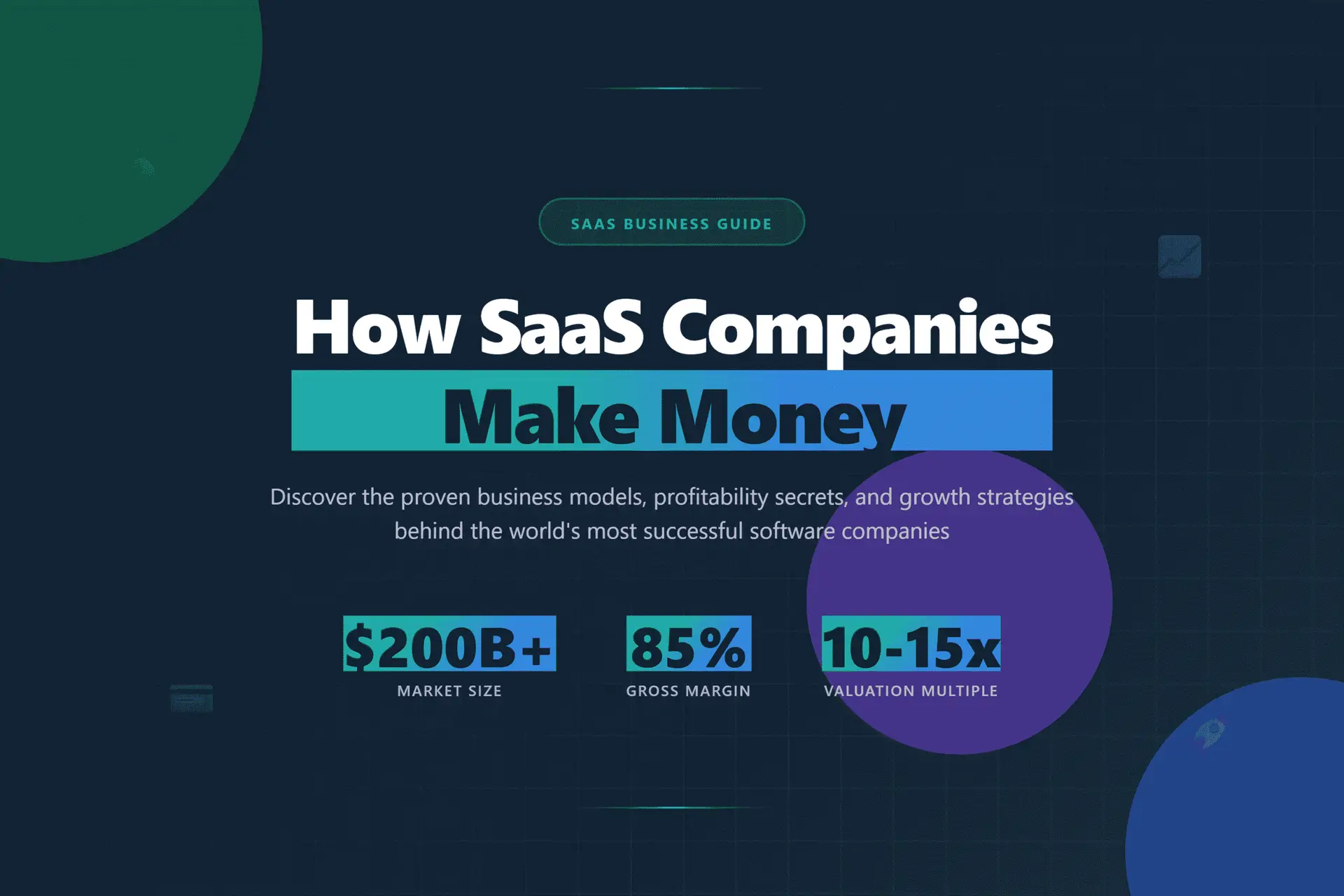
Software as a Service (SaaS) has become one of the most powerful and profitable business models in the digital economy. From startups to billion‑dollar companies, SaaS businesses dominate industries like marketing, finance, HR, customer support, and productivity.
In this detailed guide, you’ll learn how SaaS companies make money, why they are so profitable, how much they spend on marketing, how they are valued, and what makes a SaaS company successful.
What Do SaaS Companies Do?
SaaS companies create cloud‑based software that users can access online without installing anything on their devices. Instead of selling software as a one‑time purchase, SaaS companies provide continuous access through subscriptions.
Examples include:
- CRM software
- Accounting tools
- Email marketing platforms
- Project management systems
- AI‑powered tools
SaaS businesses focus on solving ongoing problems, which allows them to generate recurring revenue over time.
How Do SaaS Companies Work?
SaaS companies operate using a cloud infrastructure. Users sign up, log in through a browser or app, and pay regularly to keep using the software.
Key operational elements include:
- Cloud hosting and maintenance
- Regular updates and feature releases
- Customer support and onboarding
- Data security and backups
This model allows SaaS companies to scale globally with relatively low incremental costs.
How Do SaaS Companies Make Money?
The primary way ,how SaaS companies make money is through recurring revenue models. Below are the most common monetization methods.
Subscription‑Based Revenue
This is the most popular SaaS monetization strategy.
- Monthly subscriptions
- Annual subscriptions (often discounted)
- Tiered pricing plans (Basic, Pro, Enterprise)
Recurring subscriptions create predictable income and long‑term customer relationships.
Freemium Model
Many SaaS companies offer a free version with limited features.
- Free users experience the product
- Paid upgrades unlock advanced features
- Helps reduce customer acquisition cost
Usage‑Based Pricing
Some SaaS tools charge users based on usage, such as:
- Number of users
- Storage consumed
- API calls
- Transactions processed
This model scales revenue directly with customer growth.
Enterprise & Custom Plans
Large organizations often require custom pricing, onboarding, and support. These plans generate high‑value contracts and long‑term retention.
Are SaaS Companies Profitable?
Yes, many SaaS companies are highly profitable, especially once they reach scale.
Early‑stage SaaS companies may operate at a loss due to high marketing and development costs. However, as customer acquisition stabilizes and retention improves, profits grow significantly.
Profitability depends on:
- Customer retention rate
- Lifetime value (LTV)
- Customer acquisition cost (CAC)
- Operational efficiency
Why Are SaaS Companies So Profitable?
Several factors make SaaS one of the best business models:
- Low marginal costs: Serving additional customers is inexpensive
- Recurring revenue: Predictable monthly income
- High scalability: Global reach with minimal infrastructure growth
- Strong customer lifetime value: Long‑term subscriptions
These advantages allow successful SaaS companies to generate sustainable profits.
How Much Money Do SaaS Companies Make?
SaaS revenue varies widely based on size and market.
- Small SaaS startups: $5,000–$50,000 per month
- Growing SaaS companies: $100,000–$1M+ ARR
- Enterprise SaaS companies: Hundreds of millions or billions annually
Most SaaS businesses track growth using Annual Recurring Revenue (ARR) and Monthly Recurring Revenue (MRR).
How Much Do SaaS Companies Spend on Marketing?
Marketing is one of the biggest expenses for SaaS companies.
Typical spending:
- Early‑stage SaaS: 30–50% of revenue
- Growth‑stage SaaS: 20–40%
- Mature SaaS companies: 10–20%
Marketing channels include:
- SEO and content marketing
- Paid ads
- Email marketing
- Affiliate and referral programs
The goal is to maintain a healthy balance between CAC and LTV.
What Makes a SaaS Company Successful?
Successful SaaS companies focus on more than just revenue.
Key success factors include:
- Strong product‑market fit
- Excellent onboarding experience
- Low churn rate
- Continuous product improvement
- Reliable customer support
Retention is often more important than acquisition in SaaS.
How SaaS Companies Are Valued
SaaS companies are typically valued using revenue multiples rather than profit alone.
Common valuation factors:
- ARR growth rate
- Customer retention
- Churn rate
- Profit margins
- Market size
Fast‑growing SaaS companies can sell for 5x–15x annual revenue, sometimes even higher.
How Much Do SaaS Companies Sell For?
SaaS companies can be sold through acquisitions or public offerings.
Smaller SaaS exits:
- $1M–$10M for niche tools
Mid‑size SaaS exits:
- $20M–$200M
Large SaaS companies:
- Hundreds of millions or billions
The selling price depends heavily on growth, retention, and market demand.
How Many SaaS Companies Are There in the World?
There are tens of thousands of SaaS companies globally, with new tools launching every year.
The SaaS industry continues to grow rapidly due to:
- Remote work adoption
- Cloud computing expansion
- AI integration
- Subscription‑based consumer behavior
Despite competition, niche SaaS opportunities still exist.
SaaS vs Other Subscription Models
While SaaS is subscription‑based, it differs from services like entertainment platforms or game subscriptions.
Key differences:
- SaaS focuses on productivity and business outcomes
- High switching costs and long‑term usage
- Strong emphasis on retention and updates
This makes SaaS more predictable and scalable than many other subscription models.
Conclusion
SaaS companies make money through recurring subscriptions, scalable infrastructure, and long‑term customer relationships. While competition is growing, SaaS remains one of the most profitable and sustainable business models in the digital world.
If built with the right strategy, a SaaS business can generate predictable income, strong valuations, and long‑term success.
How long does it take for a SaaS company to become profitable?
Usually 2–5 years, depending on growth and expenses.
Is SaaS a good business for beginners?
Yes, but it requires patience, technical understanding, and strong marketing.
Can small SaaS companies compete with big players?
Yes, especially by targeting niches and solving specific problems.
1 thought on “How SaaS Companies Make Money (Business Model, Profitability & Growth)”